














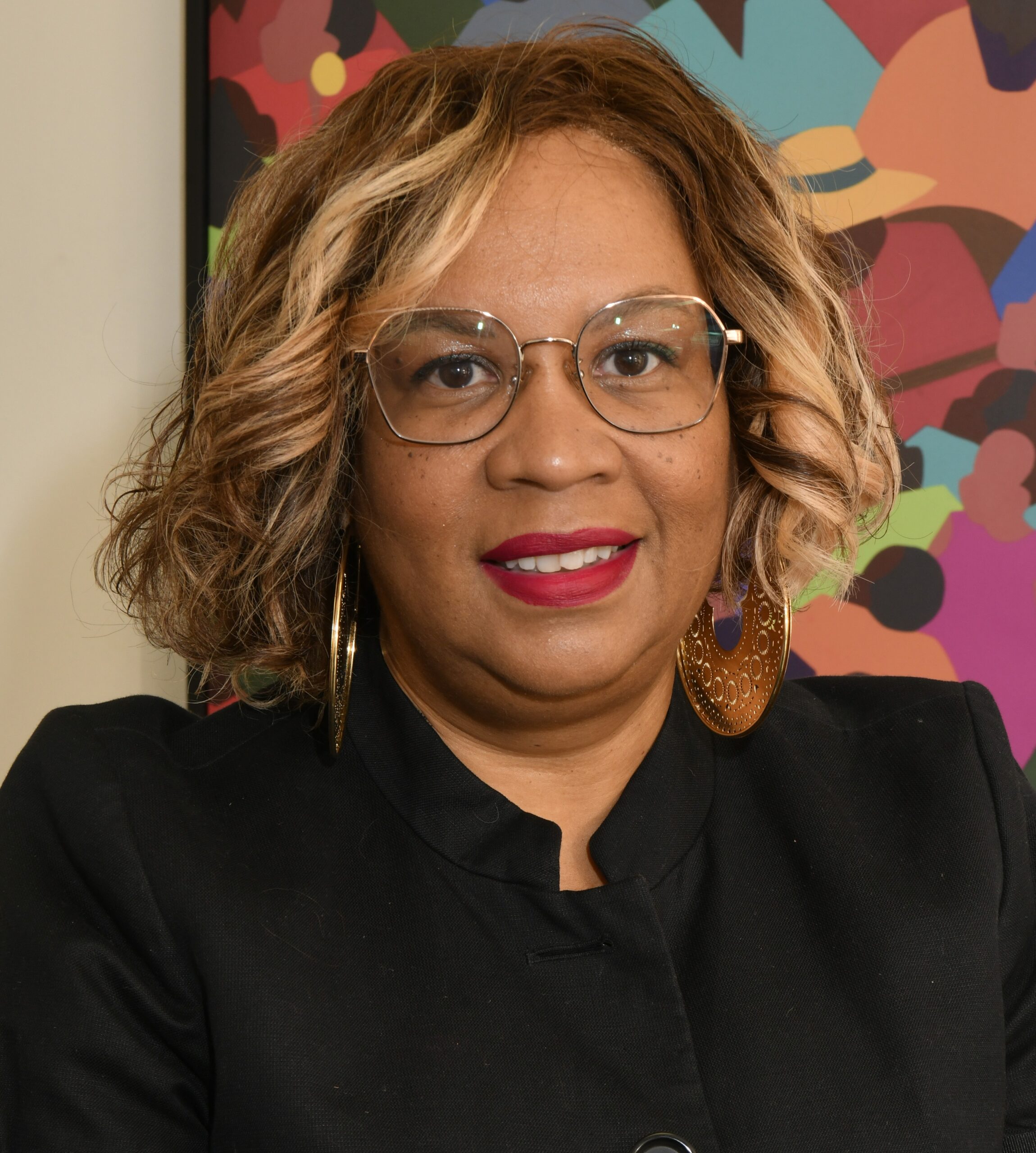
By Edward Henderson | California Black Media
With more than 25 years of experience spanning public affairs, community engagement, strategy, marketing, and communications, Kellie Todd Griffin is recognized across California as a leader who mobilizes people and policy around issues that matter.
As the President & CEO of the California Black Women’s Collective Empowerment Institute, Griffin is on a mission to shift the narrative and outcomes for Black women and girls across California. She founded the nation’s first Black Women’s Think Tank, securing $5 million in state funding to fuel transformative policy change.
With a degree in journalism and public relations from the University of Texas at Arlington, Griffin has served as Communications Director for former congressmember—and now LA Mayor—Karen Bass.
She is also a proud mother of two sons.
Griffin spoke with California Black Media (CBM) about her successes and setbacks in 2025 and her hopes for 2026.
Looking back at 2025, what stands out to you as your most important achievement and why?
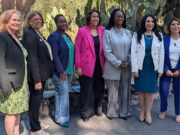
Our greatest achievement in this year is we got an opportunity to honor the work of 35 Black women throughout California who are trailblazing the way for the next generation of leaders.
How did your leadership, efforts and investments as President & CEO California Black Women’s Collective Empowerment Institute contribute to improving the lives of Black Californians?
We’re training the next leaders. We have been able to train 34 women over a two-year period, and we’re about to start a new cohort of another 30 women. We also have trained over 500 middle and high school girls in leadership, advocacy, and financial literacy.
We are ensuring that Black women and girls are ready to step up when needed—ready to take on the baton when it is time to be passed.
What frustrated you the most over the last year?
Our greatest frustration is always getting the question, “why.” Why advocate for Black women? Why invest in Black people, Black communities? It’s always constantly having to explain that, although we are aware that there are other populations that are in great need, the quality-of-life indices for Black Californians continue to decrease. Our life expectancies are decreasing. Our unhoused population is increasing. Our health outcomes continue to be the worst.
We’re not asking anyone to choose one group to prioritize. We are saying, though, in addition to your investments into our immigrant brothers and sisters — or our religious brothers and sisters – we are also asking you to uplift the needs of Black Californians. That way, all of us can move forward together.
What inspired you the most over the last year?
I’ve always been amazed by the joy of Black women in the midst of crisis—that Black women and girls can find joy in many different ways, whether it’s through sisterhood, or through dance, or just through convening.
That is really our secret sauce. We don’t let the current state of any issue take our joy from us. It may break us a little bit. We may get tired a little bit. But we find ways to express that—through the arts, through music, through poetry.
What is one lesson you learned in 2025 that will inform your decision-making next year?
Reset. It’s so important not to be sitting still. We have a new administration. In the last administration, there was a hyper-focus on Black women and moving Black women forward and putting them in key positions. Now, we’re seeing data showing that Black women have the largest unemployment rate. We’ve lost so many jobs.
What we really learned from that is that the need to reset is going to have to be our path forward. We can have rest—we can be restful—but we have to continue the resistance.
In one word, what is the biggest challenge Black Californians faced in 2025?
Motivation.
And I choose motivation because of the tiredness. What is going to motivate us to be involved in 2026? What’s going to motivate us to lock arms with each other, recognizing that we cannot be separate at a time such as this, that we need to be collective?
What is the goal you want to achieve most in 2026?
I want to continue to get Black Californians, in spaces and places of power and influence, as well as opportunities to thrive economically, socially, and physically.