
















By Edward Henderson | California Black Media
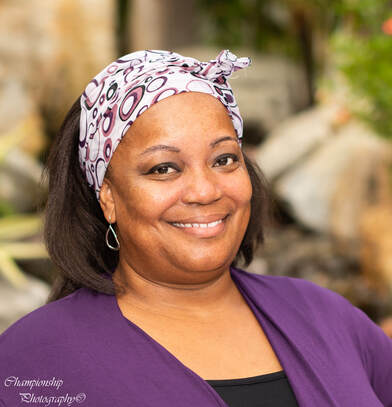
South Los Angeles native Sonya Young Aadam is the CEO of California Black Women’s Health Project (CABWHP).
The nonprofit is committed to improving the health of California’s Black women and girls through advocacy, education, policy, and outreach. They also advocate for policies and practices that promote and improve physical, spiritual, mental, and emotional well-being.
After leaving the state for 14 years to attend The Wharton School of the University of Pennsylvania in Philadelphia and pursue a career in commercial and investment banking, Aadam returned to California to dedicate her talents to community service. Using her skills in strategic analysis and management, Aadam is determined to positively impact the lives of those around her.
Young Aadam spoke to California Black Media (CBM) about her achievements and frustrations in 2025 — along with her hopes for 2026.
Looking back at 2025, what stands out to you as your most important achievement and why?
This year, our most important achievement has been standing in the gap for Black communities across California in moments of urgent crisis and emerging health challenges. From responding to the devastating fires in Altadena and the Palisades, to addressing the rising projections of Black individuals living with Alzheimer’s, California Black Women’s Health Project (CABWHP) remained grounded in our commitment to holistic health and well-being, even as the landscape around us continued to shift.
In the aftermath of the fires, CABWHP held grief-focused Sister Circles, intentional spaces where Black women could gather, process loss and be supported in community. We also coordinated donation banks to help meet the immediate needs of those most impacted.
How did your leadership, efforts and investments with CABWHP in 2025 contribute to improving the lives of Black Californians?
My leadership at CABWHP has centered on the principle that we lift as we climb. This principleensures that our progress is never individual, but collaborative and collective. Through strategic investments in policy, advocacy, community capacity building and direct outreach, we have continued to uplift Black Californians.
One of our key priorities has been protecting and expanding the critical infrastructure that supports mental health in our communities. When the proposed elimination of California Reducing Disparities Project (CRDP) funding threatened programs designed by and for communities historically excluded from traditional mental health systems, CABWHP acted. We reminded decision-makers that CRDP is more than funding. It is life-saving infrastructure.
What frustrated you the most over the last year?
What’s been most frustrating this year is navigating a social and political landscape that continues to devalue community-led work, especially when it comes to the health and well-being of Black communities. The constant shifts in political will and priorities directly impact funding, public perception, and the kind of messages reaching our communities.
We’ve seen how policy decisions that are often made without community input can destabilize vital programs and erode trust. We’ve also had to work even harder to ensure our communities receive accurate and culturally congruent information in the face of narratives that ignore or misrepresent our realities. These dynamics don’t just create barriers; they deepen disparities.
What inspired you the most over the last year?
What has inspired me most this year is witnessing the power of our community. Throughout the challenges, Black women across California have remained at the center of every effort; they have led with purpose, vision and determination. Seeing communities come together to demand change, support one another and build pathways that prioritize Black women’s health and well-being reinforces why our work matters. This shared commitment propels us to create a future where Black women are genuinely seen, heard and valued.
What is one lesson you learned in 2025 that will inform your decision-making next year?
This year affirmed the importance of addressing systemic issues through multiple, coordinated strategies. Real change requires more than one approach; it takes advocacy, education, outreach and policy working in concert. Our work in maternal health is a clear example: while CABWHP pushed for stronger policies and investments to improve outcomes for Black birthing people, we’ve also expanded community education and outreach to ensure individuals have the information and support they need to make empowered decisions.
In one word, what is the biggest challenge Black Californians faced in 2025?
Racism.
What is the goal you want to achieve most in 2026?
In 2026, our goal is to deepen our presence across California as a trusted force for change. CABWHP will lead through policy, advocacy, outreach and education that respond to the moment and reflect the evolving needs of Black women and girls. As crises emerge and systems shift, we are focused on creating spaces for healing, holding institutions accountable and ensuring that Black women are not only heard but centered in the solutions.