

















By Myshjua Allen Murray
As Black Music Month comes to a close, I hope this series has helped to provide a broader perspective of black music beyond being entertainment for the moment.
Black music is a lot like black love- rhythmic, resilient, and everlasting. Black music defines and interprets an era, capturing a moment in time and preserving it for generations to come. Long after the performers are gone, the music remains. It tells stories, reflects culture, and allows listeners to experience moments in time as if they were living within the melodies.
That is the enduring power of Black music.
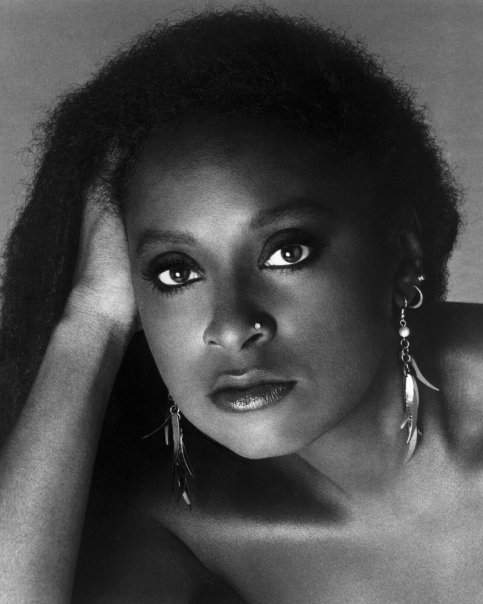
1960; Nashville, TN- eleven-year old Sandra “Dhaima” Matthews walked into the offices of Tree Publishing with a notebook full of songs and a belief that she had something worthwhile to say. Music publishers Buddy Killen and Bob Riley recognized her talent and decided to take a chance on Sandra and her friend, Connie Burns, who performed together as a duo. They introduced them to a young promo man from CBS Records named Carl Davis, and The Buttons became the first female group from Nashville signed to a major record label.
The group recorded a handful of singles, but those recordings traveled much farther than anyone could have imagined. Their best-known release, “Shimmy Shimmy Watusi,” received international attention and reached the Top 10 in Japan.
The Buttons also shared a remarkable intersection of music history. Before becoming a guitar legend, Jimi Hendrix worked with the group as their session guitarist and is credited with giving the group its name. One of their singles, a B-side titled “My Photograph Book” was penned by Ronnie Wilkens who would go on to co-write the classic Dusty Springfield hit “Son of A Preacher Man.” Carl Davis would go on to become one of the most influential record executives in Black music history, working with artists such as Jackie Wilson, Barbra Acklin, and The Chi-Lites.
In 1976, after studying art and African Studies in California, Dhaima began a second musical chapter. Encouraged by Bob and Rita Marley, she moved to Jamaica and immersed herself in reggae music. She started working with Joe Gibbs Records, writing and recording her reggae music debut, “Inna Jah Children,” which spent 13 weeks on the UK reggae charts. Her first duet with Dennis Brown, “A True,” topped Caribbean charts for 33 weeks. While in Jamaica, Dhaima also started her own company, Ninakupenda Music. She continued to write, produce, and release songs under her own production and publishing company through the next two decades. In 1994, she would reunite with Dennis Brown in the studio writing and recording “I Am A Winner” for his GRAMMY nominated album Light My Fire.
But the most important part of this story is not what happened during her lifetime. It’s how the story continues to unfold.
Today, almost three decades after her passing, people are still discovering Dhaima’s music and art. Songs she recorded in the 1960s, 70s, and 80s continue to find listeners on streaming platforms and YouTube. In 2020, The Numero Group, a label known for classic reissues, released her EP, Love Is Forever, introducing a new generation to recordings that might otherwise have been forgotten. A year later, her song “Reggae On Sunset” appeared in the Netflix series Firefly Lane, proving that great art can find new audiences long after it is created.
Throughout her life, Dhaima inspired artists, musicians, writers, students, and everyday people who crossed her path. She traveled the world sharing her heart, her creativity, and her belief in the power of culture to connect people. The impact of art and music was never intended to be measured by record sales, chart positions, or social media followers.
Art that touches even one life matters.
A young girl’s notebook full of songs took her from a Nashville recording studio to stages and television screens across the Caribbean and beyond. Yet her greatest achievement may not have been where her music took her, but how her art continues to inspire others years after she is gone.
As Black Music Month comes to an end, perhaps that is the lesson worth remembering. Not every artist becomes a household name. Not every song becomes a viral hit. Yet Black music continues to shape lives, preserve history, and inspire future generations in ways that cannot always be measured.
Black creators are the keepers of our culture. Black music has always been about connection, expression, storytelling, and community. As long as we continue to create, our history can never be erased.
Sandra “Dhaima” Matthews left behind recordings, paintings, writings, memories, and a story that continues to unfold. If you want to understand the enduring power of Black music, don’t just read about it. Explore her story. Listen to the music. Start with Love Is Forever and let it spark a journey of your own.
Because Black music, like Black love, is powerful, inspirational, and inherent to our survival.