





















What Juneteenth, Mother Wit, and BWL Entertainment’s New Tapedeck Partnership Teach Us About Freedom in the Music Business
By Myshjua Allen Murray for WSS News, Arts, Entertainment & Culture
As we celebrate Juneteenth this week, a lot of the conversation centers on freedom, self-determination, and the ability to build something that can be passed from one generation to the next.
For Black creators, that conversation extends beyond music itself. There are layers and levels to this. Who wrote it and who sang it matters, but so does:
- Who owns it?
- Who controls the recordings?
- Who benefits when those songs continue generating value years—even decades—after they were created?
Few artists understood those questions better than Betty Wright.
Most people know Betty Wright as the voice behind classics like “Clean Up Woman,” “Tonight Is the Night,” “Girls Can’t Do What Guys Do,” and “No Pain, No Gain.” They know her as a six-time Grammy nominee, a Grammy Award winner, a producer, songwriter, vocal coach, and one of the most sampled female artists in hip-hop history. Her vocal and songwriting influence can still be heard throughout contemporary R&B, and viral social media clips introduced her to a new generation as the “Queen of the Whistle Register.”
But Betty Wright’s most important legacy might not be a hit record.
It may be a business decision she made more than forty years ago.
In 1985, after another frustrating experience with the major label system, Betty Wright decided to take a leap of faith.
She launched her own independent record company. Ms. B Records was born at a time when major labels controlled almost every aspect of the industry. There was no social media. No digital distribution. No streaming services. No direct-to-fan marketing platforms.
Today, independent artists can upload music to digital platforms from their phones. In the mid-1980s, independence looked very different. There was no Spotify, YouTube, Instagram, TikTok, or Bandcamp. There were no digital distributors or direct-to-fan sales platforms.
If an artist wanted to release music independently, they had to finance the recordings, manufacture the records, negotiate distribution, coordinate promotion, and hope the albums sold well enough to recover the investment.
The risks were substantial. So were the rewards.
What makes Wright’s accomplishment even more remarkable is where it happened.
She wasn’t operating from New York, Los Angeles, or Nashville—the traditional power centers of the music business. She knew the unsung influence of Miami, already home to Criteria recording studio and global supergroups like The Bee Gees and KC & The Sunshine Band. Betting on her hometown, Ms. B Records was built in Miami. Betty and her husband, Noel “King Sporty” Williams, used their solid local connections to build direct relationships with distributors, retail, and radio across the country.
The gamble paid off.
The label’s early success was followed by a landmark achievement. Released in 1987, Mother Wit produced the hit singles “After the Pain” and “No Pain, No Gain.” One year later, the album was certified Gold, making Betty Wright the first woman to earn a Gold album on a label she owned.
That gold record plaque was about more than selling records. It was about going against the system.
For generations, most recording artists worked within a system that often resembled sharecropping more than ownership. Artists created the music, but the long-term value frequently flowed elsewhere. Betty Wright changed the game for herself when she invested in Ms. B.
Throughout her career, Wright worked not only as a singer, but as a songwriter, producer, publisher, and record company owner. She established Ms. B Records and later built Miami Spice Music, creating a structure that allowed her to own and control significant portions of the work she created.
She understood that creative freedom and economic freedom could go hand in hand.
That distinction matters. She wasn’t alone in advocating for artist rights, but she was years ahead of a conversation that has become commonplace today.
The lessons continued throughout her career.
When unauthorized samples of her music appeared, she fought to protect her rights. When industry trends shifted, she adapted. As radio consolidation made it harder for independent artists to compete for airplay, she continued touring, producing, mentoring younger artists, and releasing music through her own company. She became one of the few artists whose influence remained visible across multiple generations.
During the 1990s and 2000s, new audiences discovered Betty Wright through her work with artists such as Joss Stone, Angie Stone, and Lil Wayne. Television viewers came to know her as a vocal coach and mentor. Meanwhile, her catalog continued to live on through legal samples, covers, and streaming.
Yet some of her best work remained hidden in plain sight.
Albums released during the later years of her career never received the same level of exposure as her classic hits. Changes in radio programming, the collapse of record retail chains, and the rise of algorithm-driven music discovery made it increasingly difficult for independent soul artists to reach new audiences.
That makes what is happening this week especially significant.
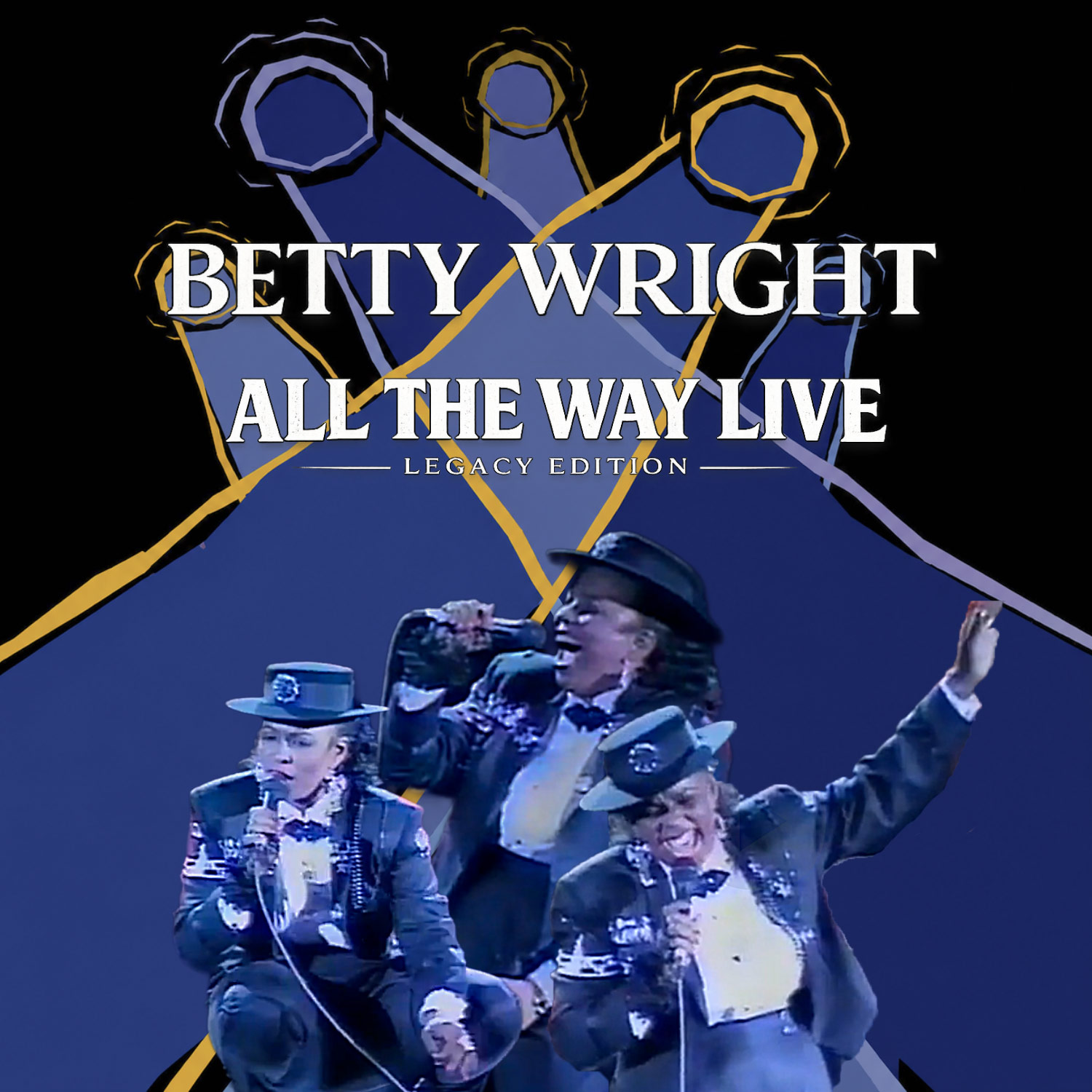
As part of a new partnership between Betty Wright Legacy Entertainment and Tapedeck, a remastered Legacy Edition of Betty Wright’s celebrated concert album All The Way Live will be available exclusively on the platform. Originally recorded before a sold-out audience at London’s Hammersmith Odeon, the album captures Wright at the height of her powers as a live performer.
Tapedeck was built around a simple idea: artists should be paid fairly for their work. According to the company, rights holders receive 80 percent of fan spending on the platform, and every stream generates significantly higher payouts than traditional streaming models.
In many ways, that philosophy aligns with the principles Betty Wright championed throughout her career.
- Ownership.
- Fair compensation.
- Creative control.
- The ability to build something that can be passed on.
The partnership also represents something larger.
For fans, the release is an opportunity to rediscover one of soul music’s greatest performers.
For independent artists and entrepreneurs, it represents something else.
Proof ownership matters. Copyrights matter. Masters matter.
Proof that decisions we make today can continue creating opportunities for future generations.
That may be Betty Wright’s greatest legacy lesson.
During Juneteenth weekend, many people will celebrate freedom. Thousands of people will listen to Betty Wright’s music. Some will remember the hits. Others will discover her for the first time. What many may not realize is that the story of Betty Wright and Ms B Records is a freedom story, one that reminds us that freedom is not only about opportunity. It is also about ownership and decisions.
And because she understood the difference, her music remains not only a cultural legacy, but a family legacy as well.
Learn more about Betty Wright at her official website bettywrightofficial.com and listen to the exclusive remastered edition of All The Way Live on Tapedeck: https://zedge.sng.link/Dzg0z/z28mv?_smtype=3