

















The former Atlanta mayor shatters a 250-year political barrier, flips Georgia’s governorship from Republican to Democratic control, and inspires a new generation of Black women in leadership.
By WSS News Staff
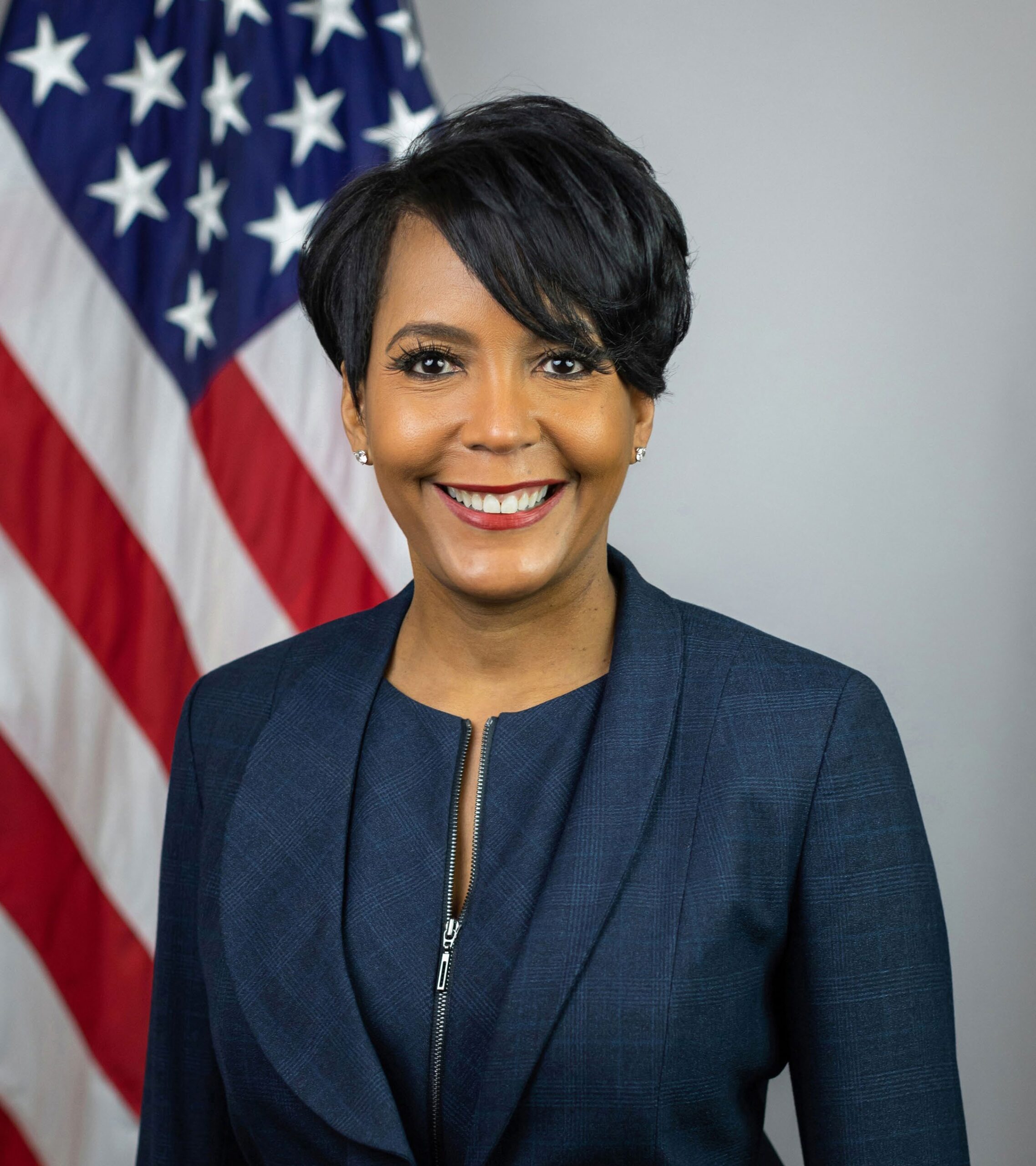
History was made in Georgia on Tuesday, November 3, 2026, as former Atlanta Mayor Keisha Lance Bottoms accomplished what no Black woman had ever achieved in the United States: winning an election to become governor of a state.
Bottoms defeated Republican businessman Rick Jackson in Georgia’s highly anticipated gubernatorial election, becoming not only the state’s first woman governor but also the first Black woman elected to lead any of the nation’s 50 states.
Her victory represents a monumental achievement in American political history, breaking a barrier that had remained intact since the nation’s founding 250 years ago.
For Black women who have spent generations organizing communities, leading political movements, mobilizing voters and fighting for representation, Bottoms’ victory carries a significance extending far beyond Georgia’s borders.
It also marks a dramatic political shift in the Peach State, ending more than two decades of Republican control of the governor’s office.
The Associated Press called the race for Bottoms shortly before 9:30 p.m. Tuesday, setting off celebrations among supporters gathered in Atlanta.
A Historic Victory Against the Odds
Bottoms’ victory came after a competitive and expensive campaign against Jackson, the founder of Jackson Healthcare, who invested approximately $200 million of his personal fortune into his campaign.
Jackson received endorsements from outgoing Republican Governor Brian Kemp and President Donald Trump, making the election a major contest between Georgia’s established Republican leadership and a Democratic Party seeking to reclaim statewide power.
Despite the Republican financial advantage, Bottoms built a campaign centered on affordability, healthcare access and the economic struggles of everyday Georgians.
With roughly 97% of the vote counted early Wednesday, Bottoms had secured approximately 54% of the vote compared with Jackson’s 46%, according to election reporting.
Her victory returns the governor’s office to Democratic control for the first time since Roy Barnes lost his reelection bid in 2002.
Jackson conceded Tuesday evening, acknowledging the voters’ decision and congratulating Bottoms on her victory.
From Atlanta City Hall to Georgia’s Governor’s Mansion
For Bottoms, the journey to the governor’s mansion reflects decades of public service, political experience and perseverance.
Before entering statewide politics, Bottoms served on the Atlanta City Council and was elected mayor of Atlanta in 2017, taking office in January 2018.
During her four-year mayoral administration, Bottoms led one of America’s most influential majority-Black cities through a period marked by the COVID-19 pandemic, nationwide protests following the murder of George Floyd, and intense debates surrounding public safety, policing and racial justice.
Her leadership brought national attention, positioning her as a prominent voice within the Democratic Party.
Following her time as mayor, Bottoms joined President Joe Biden’s administration, serving as director of the White House Office of Public Engagement and later as a senior adviser.
Her experience in municipal government and the White House provided the political foundation for her successful campaign for governor.
Now, she prepares to move from leading Georgia’s capital city to overseeing the entire state, with responsibility for millions of residents across urban, suburban and rural communities.
Standing on the Shoulders of Generations
One of the most powerful moments of Bottoms’ election night came when she reflected on her family’s history in Georgia and the generations of Black Americans whose sacrifices made her victory possible.
During her victory speech, Bottoms described visiting Crawfordville, Georgia, where her family roots extend back at least five generations.
There, she visited the grave of her great-great-grandmother, Betsy Peek, who was born in 1845, two decades before the abolition of slavery.
The personal significance of that visit was profound.
Bottoms reflected on the generations of relatives who lived through slavery, segregation and racial discrimination, never knowing that one of their descendants would someday become the governor of Georgia.
Her story also carries particular weight because Crawfordville was home to Alexander Stephens, the former vice president of the Confederacy.
The contrast between those two histories became one of the defining symbols of her victory.
A descendant of a woman born into slavery would now become the first Black woman to govern a state once central to the Confederacy.
For Black Americans, especially Black women, the moment represents both a celebration of progress and a reminder of the generations who struggled to make political representation possible.
The Legacy of Stacey Abrams and Black Women’s Political Power
Bottoms’ victory also reflects years of political organizing throughout Georgia, particularly the work of Black women who have helped transform the state’s electoral landscape.
Among them is Stacey Abrams, whose historic 2018 gubernatorial campaign helped energize a multiracial coalition and expand voter engagement across the state.
Abrams became the first Black woman nominated for governor by a major political party in the United States. Although she lost her campaigns against Brian Kemp in 2018 and 2022, her organizing efforts contributed to Georgia becoming a competitive battleground state.
Those efforts helped establish the political environment in which Democrats successfully elected Joe Biden in 2020 and sent Jon Ossoff and Raphael Warnock to the U.S. Senate.
Bottoms’ victory represents another significant chapter in that political transformation.
It also highlights the often-overlooked influence of Black women in American democracy.
For generations, Black women have been among the Democratic Party’s most dependable voters, organizers and community leaders, yet they have remained significantly underrepresented in the nation’s highest elected offices.
Bottoms’ election changes that history.
Her victory sends a message to young Black girls across America that the highest levels of executive leadership are no longer beyond their reach.
What Governor-Elect Bottoms Plans for Georgia
While the historical importance of her election is undeniable, Bottoms will enter office facing significant challenges.
Throughout her campaign, she emphasized the need to address the rising cost of living, expand healthcare access and make Georgia more affordable for working families.
One of her leading priorities is expanding Medicaid, a longstanding Democratic objective in Georgia.
Supporters argue that expansion would provide healthcare coverage to more residents, strengthen rural hospitals and reduce the number of uninsured Georgians.
Bottoms has also proposed measures aimed at reducing the financial burden on families, including allowing local governments greater flexibility to eliminate taxes on groceries and essential household goods.
Concerns about rising electricity bills and the expansion of large data centers have also emerged as important policy issues. Bottoms has called for a pause on new data center construction as Georgia evaluates its impact on energy costs and communities.
However, her ability to advance these proposals will depend in part on negotiations with state lawmakers.
Although Democrats achieved major statewide victories Tuesday, Republicans are expected to retain control of the Georgia Senate, creating a political environment that will require compromise and coalition-building.
Bottoms will need to demonstrate that her governing approach can address the needs of Georgians across party lines.
A Historic Election for Black Women Nationwide
Bottoms’ victory came during a midterm election that produced several historic breakthroughs for women and candidates from underrepresented communities.
On the same night, Stacey Plaskett was elected governor of the U.S. Virgin Islands, becoming the first Black woman elected to govern a United States jurisdiction.
The distinction is significant: Bottoms becomes the first Black woman elected governor of a U.S. state, while Plaskett makes history in a U.S. territory.
The achievements illustrate an expanding landscape of political representation at a time when voters are also demanding greater accountability and meaningful solutions to economic and social challenges.
For young women pursuing careers in law, public service, politics and community leadership, these victories offer visible examples of what can be accomplished despite longstanding institutional barriers.
A Victory That Belongs to More Than One Generation
The election of Keisha Lance Bottoms is about more than one candidate, one political party or one state.
It is a historic moment that connects the struggles of the past with the possibilities of the future.
From Black women who were once denied the right to vote to those who helped organize the civil rights movement, register voters and fight for political representation, Bottoms’ victory stands as a testament to generations of perseverance.
Her rise also underscores the importance of civic engagement, reminding Americans that political change often begins with local organizing, community involvement and the determination to keep participating even after electoral defeats.
The symbolism of her victory is powerful, but the expectations surrounding her administration will be equally significant.
As governor, Bottoms will be responsible for turning her campaign promises into policies that improve the lives of Georgia residents.
Her success will ultimately be measured not only by the history she made on Election Night but also by the opportunities she creates for the people she has been elected to serve.
Nevertheless, November 3, 2026, will forever hold a special place in American history.
For the first time in 250 years, a Black woman has been elected governor of a U.S. state.
And in a state whose history includes slavery, segregation and some of the nation’s most consequential civil rights struggles, that milestone carries extraordinary meaning.
Keisha Lance Bottoms did more than win an election. She broke a barrier that generations of Black women had worked to overcome, opening another door for those who will follow.