


















Reported by Purposely Awakened
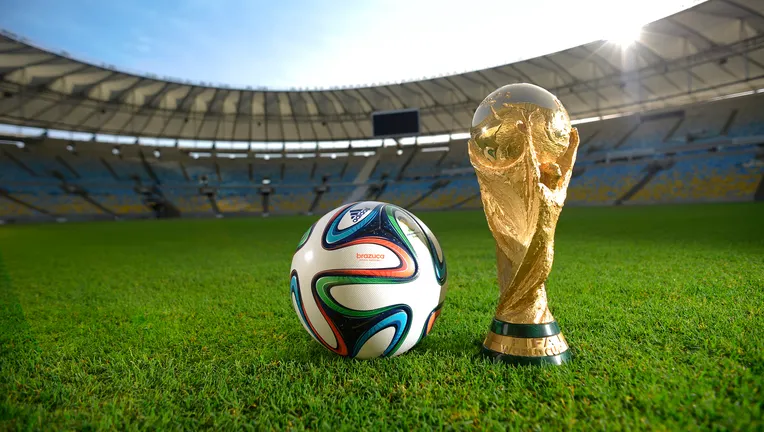
The 2026 FIFA World Cup is not finished yet, but it has already given us history, heartbreak, unexpected heroes and enough dramatic endings to remind us why billions of people call soccer the beautiful game.
This year’s tournament is unlike any World Cup before it.
For the first time, three countries—Canada, Mexico and the United States—are sharing hosting responsibilities. The field has expanded from 32 to 48 teams, with 104 matches scheduled across 16 host cities between June 11 and July 19.
That expansion means more countries have been invited onto the world’s largest soccer stage. It also means fans are not experiencing one version of North America. They are moving through cities with distinct histories, cultures, languages and identities.
From Mexico City’s deep fútbol tradition to Atlanta’s Black cultural influence, Toronto’s diversity and Seattle’s passionate supporters, the stadiums may provide the fields—but the cities are providing the soul.
The Knockout Stage Has Already Delivered History
The Round of 32 began on June 28 after the conclusion of the expanded group stage. Canada, Brazil, Paraguay, Morocco and Norway were among the first teams to secure places in the Round of 16.
But this tournament has not been kind to reputations.
Germany entered the knockout stage as a four-time world champion and one of international soccer’s most recognizable powers. Paraguay eliminated the Germans in a penalty shootout after a 1–1 draw, handing Germany its third consecutive early World Cup exit and its first World Cup penalty-shootout defeat.
That result gave us one of the tournament’s clearest lessons:
History can introduce you, but it cannot perform for you.
A respected name may intimidate an opponent before kickoff. Once the whistle blows, however, yesterday’s trophies cannot score today’s goals.
Every generation must earn its own story.
Canada Is No Longer Satisfied With Simply Participating
Canada entered the tournament carrying both opportunity and pressure as a co-host.
The team answered that pressure by reaching the knockout rounds and defeating South Africa 1–0, securing Canada’s first appearance in the men’s World Cup Round of 16. Stephen Eustáquio delivered the decisive goal and a moment Canadian supporters will remember long after this tournament ends.
Canada’s success represents more than one victory.
It reflects the growth of a national soccer culture that is beginning to expect more than participation.
There comes a point when being invited into the room is no longer enough. You begin to understand that you belong there—and that you have every right to compete for something greater.
Canada is learning that lesson in front of the entire world.
Norway Has Found Its Hero in Erling Haaland
Norway’s return to the World Cup knockout stages has been powered by one of the game’s most recognizable stars.
Erling Haaland scored an 86th-minute winner against Côte d’Ivoire, giving Norway a 2–1 victory and advancing the country into the Round of 16 for the first time in 28 years. The goal was Haaland’s fifth of the tournament and set up a major showdown with Brazil.
Norway’s run demonstrates what can happen when global star power and national belief finally meet at the right moment.
Haaland may receive the headlines, but no player reaches this stage alone. Norway’s success has also required timely defending, disciplined teamwork and players willing to create opportunities without receiving equal attention.
That is the part of purpose people sometimes forget.
Being the person who scores the winning goal is powerful. Being one of the people who helped create the moment matters, too.
Brazil Survived, but the Road Is Getting Harder
Brazil moved into the Round of 16 after surviving a difficult 2–1 contest against Japan.
The five-time champions remain alive, but their path has offered a reminder that the yellow jersey no longer guarantees easy victories. Every opponent understands Brazil’s history. Most arrive determined to become part of it by producing an upset.
Brazil continues to carry one of the heaviest expectations in international sports.
The country is not merely asked to win. Its teams are expected to entertain, inspire and somehow resemble every great Brazilian squad that came before them.
That is an impossible weight to carry unless the players are allowed to become their own team.
Legacy should provide a foundation.
It should never become a prison.
Morocco Is Proving That 2022 Was Not an Accident
Morocco entered the 2026 tournament with different expectations than it carried four years earlier.
After becoming the first African nation to reach a men’s World Cup semifinal in 2022, Morocco was no longer viewed as an unknown team capable of surprising opponents. It arrived as a respected contender.
Morocco reinforced that status by eliminating the Netherlands on penalties following a 1–1 draw.
There is an important difference between being celebrated as an underdog and being recognized as a genuine threat.
Underdogs are praised for showing up.
Contenders are studied, feared and expected to win.
Morocco has earned that second kind of respect.
Its continued presence also matters across Africa and the wider diaspora. Every strong performance challenges the lazy belief that championship-level soccer must always revolve around the same European and South American nations.
Talent has never belonged to one continent.
Opportunity, investment and access may be unequal.
Talent is not.
DR Congo Has Returned to the Global Stage
The Democratic Republic of the Congo reached the knockout stage for the first time since appearing as Zaire in 1974.
The team advanced as one of the best third-place finishers after producing a 3–1 comeback victory over Uzbekistan. Its reward was a major Round of 32 meeting with England.
For DR Congo, simply returning to this stage carries enormous meaning.
The achievement reflects years of rebuilding under coach Sébastien Desabre, who developed a more consistent squad and helped transform long-term ambition into an actual World Cup run.
There is power in returning to a place where people stopped expecting to see you.
Sometimes the comeback is not loud at first. It begins with organization, patience and people committing to a vision long before the outside world considers it realistic.
Then one day, everybody calls it history.
Côte d’Ivoire Left With Pride Despite the Heartbreak
Côte d’Ivoire came within minutes of forcing extra time against Norway.
Amad Diallo equalized in the 74th minute, giving the Ivorians renewed hope before Haaland delivered Norway’s late winner. The defeat ended Côte d’Ivoire’s tournament, but its players pushed one of Europe’s strongest attacking teams until the final minutes.
Elimination hurts.
There is no inspirational quote that completely removes the pain of preparing for years and watching the opportunity end in a single match.
But losing does not erase the discipline required to reach the World Cup.
It does not erase the children who saw themselves represented.
And it does not erase the pride of wearing your country’s colors while millions of people back home live every pass, tackle and missed opportunity with you.
Mexico Opened the Tournament With Fire
Mexico began the World Cup at Mexico City’s legendary Estadio Azteca, defeating South Africa 2–0 in an emotionally charged opening match.
For Mexico, hosting this tournament is not merely an opportunity to introduce visitors to soccer.
Mexico does not need an introduction to fútbol.
The game is already woven into family traditions, neighborhood rivalries and national identity. The World Cup has simply given the rest of the world a larger window into that relationship.
Mexico City is also making history as the first city associated with hosting men’s World Cup matches in three different editions.
That is not just a sporting distinction.
It is proof that some places do not merely hold games. They become part of the game’s memory.
The United States Is Carrying Expectations at Home
The United States advanced from its group despite ending the opening stage with a 3–2 loss to Türkiye.
The Americans’ earlier results had already secured progression, but the defeat showed that playing on home soil does not remove vulnerability.
The United States entered this World Cup hoping to show that soccer has moved beyond being described as the country’s future sport.
The future has arrived.
Youth participation, international club interest, Major League Soccer’s growth and the expansion of women’s and men’s soccer culture have created a generation that does not need the rules explained.
But the national team is still confronting a difficult question:
Can American soccer culture produce consistent success at the highest level, or will commercial growth continue moving faster than results?
This tournament offers the team an opportunity to answer on the field.
Sixteen Host Cities Are Giving the Tournament Its Character
The 16 official host markets span Canada, Mexico and the United States: Toronto, Vancouver, Mexico City, Guadalajara, Monterrey, Atlanta, Boston, Dallas, Houston, Kansas City, Los Angeles, Miami, New York/New Jersey, Philadelphia, the San Francisco Bay Area and Seattle.
Each one is contributing something different.
Toronto
Toronto represents the World Cup’s international spirit before a ball is even kicked.
The city’s neighborhoods reflect generations of migration from the Caribbean, Africa, Asia, Europe, Latin America and the Middle East. Fans do not have to search far to find another nation’s food, music or community.
Toronto reminds us that multiculturalism is not simply a slogan printed in tourism materials.
It is people carrying more than one home inside them.
Vancouver
Vancouver gives the tournament one of its most naturally beautiful settings.
Mountains, water and the Pacific coastline surround a city shaped by Indigenous history and strong Asian and international communities.
The city provides a different rhythm from some of the tournament’s larger metropolitan areas—one where supporters can move from the stadium experience into nature without traveling far.
Mexico City
Mexico City carries a level of World Cup history few destinations can match.
Its stadium has witnessed legendary players, unforgettable goals and moments that became part of global soccer mythology.
But the city’s identity extends beyond the field. Mexico City offers art, architecture, ancient history, street food and the unstoppable energy of one of the world’s largest metropolitan areas.
Here, soccer is not an event being temporarily imported.
It is part of the city’s language.
Guadalajara
Guadalajara brings the cultural traditions of Jalisco into the tournament.
Mariachi, regional cuisine, tequila and deeply rooted soccer rivalries give the city an identity that cannot be duplicated elsewhere.
Guadalajara’s role shows why a true World Cup experience should never be reduced to what happens inside a stadium. Visitors should leave understanding something about the people and place that welcomed them.
Monterrey
Monterrey brings the energy of northern Mexico.
Surrounded by mountains and known for its industrial strength, the city also possesses one of the country’s fiercest soccer cultures.
Supporters in Monterrey do not treat club loyalty like a casual hobby. It is family inheritance, neighborhood identity and a commitment carried across generations.
Atlanta
Atlanta is showing the world why it remains one of America’s most influential cultural capitals.
The city brings civil rights history, Southern hospitality, Black entrepreneurship and a musical legacy that has reshaped global culture.
Visitors may arrive for soccer, but they are entering the home of movements, sounds and stories that traveled around the world long before the World Cup arrived.
Atlanta does not need to imitate another global city.
Its power comes from being unmistakably itself.
Boston
Boston brings American history together with generations of immigrant soccer traditions.
Irish, Portuguese, Brazilian, Haitian, Cape Verdean and other communities have helped make the sport part of the region’s cultural fabric.
The city’s participation reminds us that American soccer did not suddenly appear when major leagues and corporate sponsors became interested.
Immigrant communities have been nurturing it for generations.
Dallas
Dallas represents the enormous physical scale of the 2026 tournament.
North Texas is hosting matches inside one of the country’s largest stadiums, in a region where sports, entertainment and major events are rarely approached modestly.
The area’s growing international population also reflects the changing identity of the American South.
Houston
Houston may be one of the cities that most naturally represents the World Cup’s global character.
Its Mexican, Central American, African, Caribbean and Asian communities have created a place where languages, foods and traditions constantly meet.
Houston does not need to manufacture international energy for visiting fans.
It lives inside that energy every day.
Kansas City
Kansas City brings one of the United States’ most established soccer communities to the center of the tournament.
The city combines passionate sports supporters with jazz history, barbecue traditions and Midwestern hospitality.
Its inclusion also challenges the assumption that the American World Cup experience belongs only to coastal cities.
Los Angeles
Los Angeles brings entertainment, fashion, celebrity and an enormous international population.
The city hosted the United States’ opening match and is scheduled to hold eight World Cup games.
Los Angeles has been shaped by Mexican, Central American, Asian, African and Pacific Islander communities. Its World Cup identity is therefore not limited to Hollywood spectacle.
The city is global because its people are global.
Miami
Miami brings Latin American and Caribbean energy to the tournament.
Spanish, English, Haitian Creole and countless accents move through a region filled with supporters whose loyalties reach Argentina, Brazil, Colombia, Cuba, Haiti, Venezuela and beyond.
Miami does not simply host international visitors.
It is a city built by them.
New York/New Jersey
The New York/New Jersey region is scheduled to host the World Cup Final on July 19.
It is difficult to imagine a more fitting location for the tournament’s final gathering.
The region represents immigration, ambition, movement and the complicated experience of people building new lives while preserving connections to old ones.
One country will lift the trophy there.
But the crowd will represent the world.
Philadelphia
Philadelphia brings revolutionary history, working-class pride and supporters who have never been known for hiding their emotions.
The city understands loyalty.
It also understands that love for a team can include criticism, frustration and the belief that the people representing you should meet the moment.
Philadelphia fans will not simply observe the World Cup.
They will react to every second of it.
San Francisco Bay Area
The San Francisco Bay Area gives the tournament another West Coast destination shaped by immigration, innovation and activism.
The region represents both the possibilities and contradictions of modern America: extraordinary wealth and creativity existing alongside displacement and inequality.
That tension is worth acknowledging because major sporting events should not only showcase cities. They should create opportunities for the people who live there.
Seattle
Seattle possesses one of the strongest modern soccer cultures in the United States.
Its supporters are known for filling stadiums, marching together and creating an atmosphere comparable to longtime soccer cities overseas.
Surrounded by mountains, forests and water, Seattle also gives visiting fans one of the tournament’s most visually striking settings.
The city proves that American soccer passion is not theoretical.
It is already here.
A World Cup Must Leave More Than Memories
Hosting the world is an honor, but it is also a responsibility.
A successful World Cup cannot be measured only through television ratings, sold-out stadiums, tourism revenue and dramatic matches.
Cities must also consider transportation, accessibility, public safety, heat protection, worker conditions and whether residents receive meaningful benefits from the investment surrounding the tournament.
The world should leave with wonderful memories.
Host communities should be left with something valuable, too.
That may mean improved infrastructure, stronger youth soccer programs, increased support for small businesses or public spaces that remain useful after international attention moves elsewhere.
A legacy should not disappear when the temporary banners come down.
The World Cup Is Really About Belonging
The strongest moments of the tournament are not always the goals.
Sometimes they are found in the stands.
A child watches a country connected to their family compete for the first time. An immigrant wears the jersey of the homeland they left decades ago. A supporter cheers for the country where they live while still loving the country that raised their parents.
Identity does not always fit neatly inside one flag.
The World Cup gives people permission to carry all of it.
You can honor where you came from and celebrate where you are.
You can support another African, Caribbean, Latin American, Asian or European country because its journey reminds you of your own.
You can feel pride without needing someone else to lose theirs.
That may be the most beautiful part of the beautiful game.
For a few weeks, billions of people are watching the same ball, experiencing many of the same emotions and remembering that our differences do not make shared joy impossible.
The Story Is Still Being Written
There are still matches to play, favorites to test and unexpected heroes waiting for their opportunity.
Canada is making history at home. Norway has found its moment. Morocco continues to command respect. Paraguay proved that giants can fall. Brazil survived another challenge. DR Congo returned after more than half a century away from the knockout stage.
And across 16 host cities, communities are showing the world who they are.
The eventual champion will receive the trophy.
But the real story of the 2026 FIFA World Cup is already bigger than one team.
It is about nations that refused to remain in the background.
It is about cities opening their doors without surrendering their identities.
It is about people discovering that they may not speak the same language, worship the same way or come from the same country—but they still know exactly what it feels like to hope together.
That is more than a game.
That is connection.
And in a world that gives us countless reasons to focus on our divisions, connection may be the most important victory of all.