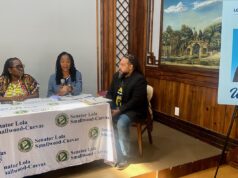




















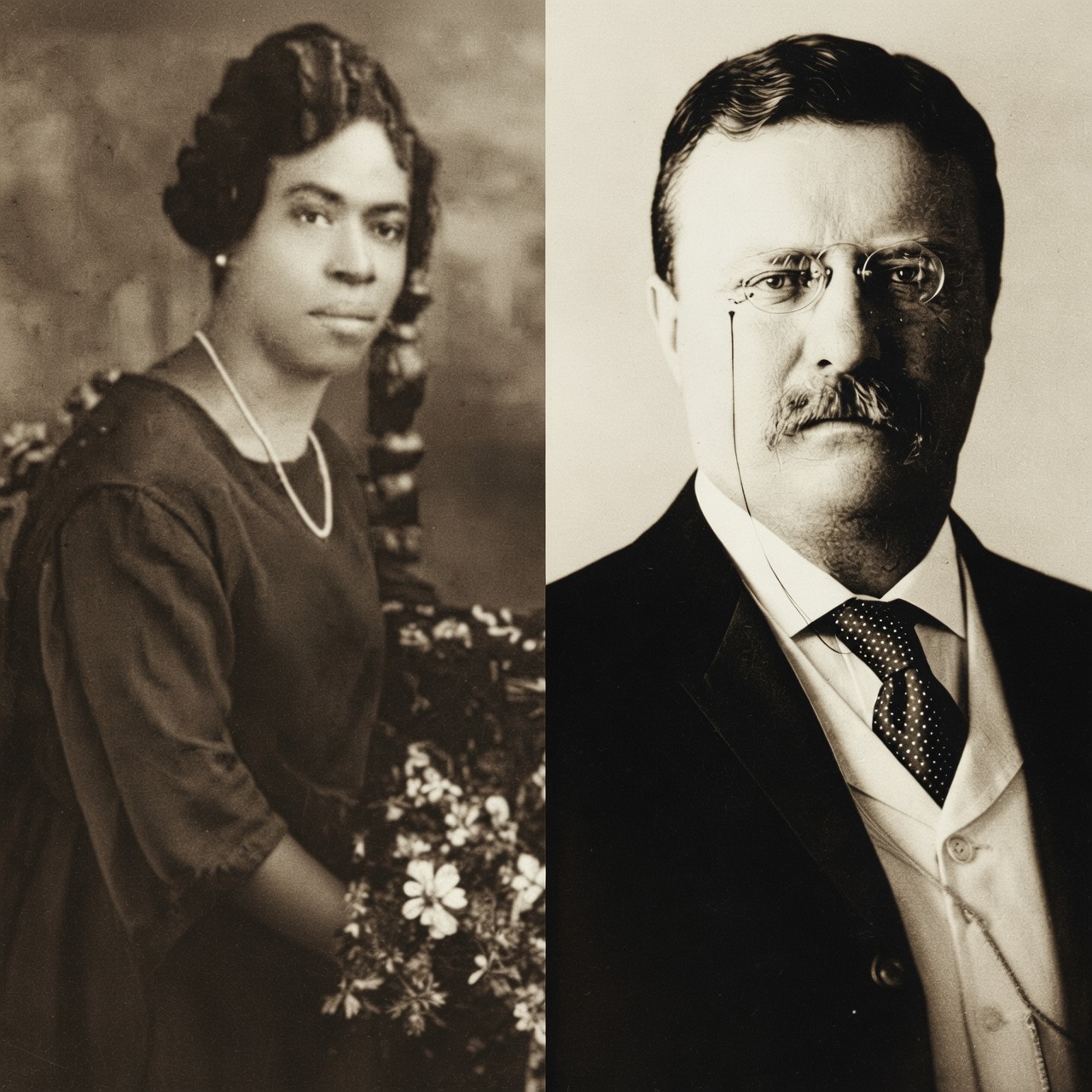
By Perry Howard, Inland Empire resident
A Black Woman Ran a Post Office So Well That White Supremacists Tried to Drive Her Out — and the President of the United States Shut Down the Entire Town Instead
In the Mississippi Delta at the end of the 19th century, power was supposed to look one way — white, male, and untouchable.
But in 1891, the federal government placed a Black woman in charge of something the town relied on every single day.
Her name was Minnie Cox. And the moment she proved she was excellent at her job, the town’s white power structure decided that excellence itself had become a threat.
A Black Woman in Charge of Federal Authority
In 1891, Minnie Cox was appointed postmaster of Indianola, Mississippi — a federal position responsible for managing mail distribution, supervising staff, and maintaining one of the most essential services in any American town.
At the time, the post office was more than a building. It was the heartbeat of communication. Bills moved through it. Business correspondence moved through it. Government documents moved through it. Family news traveled through it.
Whoever ran the post office held real influence and tremendous responsibility. Minnie Cox ran it exceptionally well.
Local reports described the Indianola post office as efficient, organized, and dependable under her leadership. Residents trusted her work. Mail arrived on time. Records were accurate. Service was professional.
In other words, she did exactly what the federal government expected. And that was the problem.
Because Mississippi in the 1890s was deep inside the Jim Crow era — a period when white supremacist laws and customs were designed to push Black Americans out of political and economic power. A Black woman running a federal office disrupted that hierarchy.
When Excellence Becomes a Target
At first, many residents simply tolerated Minnie Cox’s presence. But as the years passed, resentment grew.
White supremacist newspapers began criticizing the idea that a Black woman held authority over white citizens. Local political leaders argued that the town’s dignity was being undermined.
The hostility slowly turned into intimidation. Threats circulated. Pressure campaigns began. Community leaders demanded her removal. The message was clear: it didn’t matter how well she performed her job. A Black woman in power was unacceptable.
Facing escalating threats to her safety and the safety of her family, Minnie Cox submitted her resignation in 1902. Not because she had failed — she resigned because hatred had made her position dangerous.
But the story did not end there.
When the President Refused to Back Down
The president at the time was Theodore Roosevelt.
Roosevelt believed strongly in federal authority and saw the attack on Minnie Cox as something bigger than a local dispute. To him, it was three things: racism, mob intimidation, and a direct challenge to federal law.
If a town could drive out a federal officer through threats and harassment, then the rule of law itself was weakened. So Roosevelt made a decision that shocked the country. He refused to accept Minnie Cox’s resignation. Instead, he kept her on the federal payroll.
When white residents of Indianola still refused to accept her authority, Roosevelt escalated the conflict in a way no one expected.
The Day a President Shut Down a Town’s Mail
Roosevelt ordered the Indianola post office closed entirely. Mail service was suspended. Letters and packages were rerouted to nearby towns nearly 30 miles away.
Businesses could not easily receive orders. Farmers could not send shipments quickly. Communication slowed to a crawl. The economic and social consequences hit Indianola immediately.
Local merchants complained. Residents protested. Newspapers across the country began reporting on the dispute.
Roosevelt’s message was unmistakable: if the town would not accept the authority of a qualified Black postmaster, then the town would not receive the benefits of a federal post office at all. For months, Indianola remained cut off, and the embarrassment spread nationwide.
A Victory That Echoed Beyond One Town
Eventually, pressure mounted. Indianola’s leaders realized the situation was damaging their economy and reputation.
The town finally backed down. Minnie Cox returned to her rightful position.
Her victory was more than personal. It was one of the earliest moments in American history when the federal government openly confronted racial intimidation in defense of a Black woman’s leadership.
And it sent a signal across the South: Black excellence could not always be pushed aside.
A Second Chapter of Black Economic Power
After leaving the post office years later, Minnie Cox did not fade quietly into history. Instead, she turned her attention toward something even more powerful — economic independence.
In the early 20th century, Black communities across the South were building institutions designed to protect themselves from discrimination in white-controlled financial systems. Cox became part of that movement.
She helped establish the Delta Penny Savings Bank, one of the early financial institutions created to help Black citizens save money, secure loans, and build businesses.
She also helped found the Mississippi Life Insurance Company, which provided insurance coverage for Black families who were often denied services by white-owned companies.
These institutions were not just businesses. They were tools of survival. During the Jim Crow era, Black communities often had to build parallel economies when mainstream institutions excluded them.
Minnie Cox understood that leadership meant more than holding a title. It meant creating opportunities that could outlast discrimination.
The Legacy of a Quiet Revolutionary
Minnie Cox’s story rarely appears in school textbooks. Yet her life reveals something powerful about Black history in America: Black women have been pioneers of leadership long before society was ready to recognize them.
She did not become a symbol through speeches. She became one through competence, through professionalism, and through refusing to let intimidation erase her place.
At a time when the country was determined to silence Black voices, Minnie Cox demonstrated something that has echoed across generations: leadership does not request permission — it requires courage.
Why Her Story Still Matters
The story of Minnie Cox reminds us that the struggle for Black leadership did not begin with the civil rights movement of the 1950s. It was already happening decades earlier.
Black educators, bankers, doctors, entrepreneurs, and public officials were quietly reshaping American institutions even while facing relentless discrimination. Minnie Cox stood at the intersection of that history.
A Black woman running a federal institution in Mississippi in the 1890s was not just unusual — it was revolutionary.
When the forces of white supremacy tried to erase her, she stood firm long enough for the highest office in the nation to defend her right to serve.
A Name Worth Remembering
Minnie Cox was more than a postmaster. She was a pioneer, a business builder, and a defender of dignity in a time that tried to deny it.
Her story is a reminder that progress in America has often come from ordinary people doing their jobs with extraordinary excellence — even when the world around them hopes they fail.
And every time her name is spoken again, another piece of the history that tried to forget her is restored.
Minnie Cox — a woman who proved that courage can deliver change, even through something as simple, and as powerful, as the mail.
Minnie Cox is the grandmother of Indianola resident Perry Howard. This story was adapted from his Facebook page.