



















By WSS News Staff | November 4, 2026
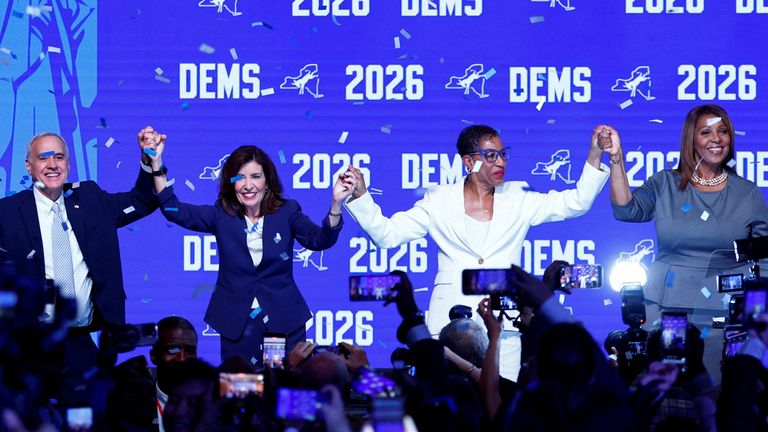
The American political landscape underwent a dramatic transformation on Tuesday, November 3, as voters delivered a historic series of Democratic victories that will reshape Washington, state governments and the direction of the country for years to come.
From California to Texas, South Carolina, Georgia and beyond, Democratic candidates secured victories that few would have imagined just two years ago. In one of the most consequential midterm elections in recent history, Democrats captured control of both the U.S. House of Representatives and Senate, while making significant gains in governor’s races and state legislatures.
For California, the election brought its own historic milestone, with former U.S. Secretary of Health and Human Services Xavier Becerra winning the governorship and becoming the state’s first Latino elected governor.
Although some races and ballot measures remain undecided as votes continue to be counted, the larger political message is unmistakable: Americans voted for change, and Democrats will enter 2027 with considerably more power.
California Makes History: Xavier Becerra Elected Governor
California voters made history by electing Democrat Xavier Becerra as the state’s next governor, succeeding outgoing Governor Gavin Newsom.
Becerra defeated Republican Steve Hilton, a conservative commentator and ally of President Donald Trump, in a decisive victory that further reinforces California’s standing as a Democratic stronghold.
With approximately 62% of the expected vote counted in the Associated Press tally available Wednesday evening, Becerra had secured approximately 64% of the vote, compared with Hilton’s 36%.
Becerra’s election is particularly significant for California’s Latino community. He becomes the first Latino elected governor of California, a milestone in a state where Latinos represent a substantial portion of the population and have played an increasingly important role in shaping its political and cultural identity.
A former California attorney general, congressman and member of President Joe Biden’s Cabinet, Becerra brings decades of government experience to Sacramento.
He will inherit a state facing significant challenges, including housing affordability, homelessness, rising living expenses, healthcare access and concerns about California’s economic future.
His administration will also govern during a period of heightened tension between Democratic-led states and the Trump administration over immigration enforcement, federal funding and other major policy disputes.
For millions of California residents, the governor’s race represented more than a change in leadership. It was an opportunity to determine what kind of state California will become in the years ahead.
Democrats Dominate California’s Statewide Races
Becerra’s victory was far from the only Democratic success in California.
Voters returned several Democratic incumbents to office and selected Democratic candidates for other important statewide positions, preserving the party’s strong influence over California government.
Among the major results:
- Lieutenant Governor: Democrat Fiona Ma defeated Republican Gloria Romero, securing approximately 64% of the vote in the continuing count.
- Attorney General: Incumbent Democrat Rob Bonta won reelection over Republican Michael Gates, receiving approximately 64% of the vote.
- Secretary of State: Incumbent Democrat Shirley Weber defeated Republican Donald Wagner with approximately 65%.
- State Controller: Democrat Malia Cohen won another term, defeating Republican Herb Morgan.
- State Treasurer: Democrat Eleni Kounalakis defeated Republican Jennifer Hawks.
The election also featured a closely watched contest for insurance commissioner between two Democrats, Jane Kim and Ben Allen, demonstrating California’s distinctive top-two election system, under which candidates from the same party can compete in a general election.
Kim held a narrow lead as counting continued Wednesday.
Meanwhile, Richard Barrera led Sonja Shaw in the nonpartisan race for state superintendent of public instruction, an election with significant implications for public education and school policy throughout California.
Together, the results demonstrated Democratic strength across the state’s executive offices while elevating a new generation of political leadership.
California Voters Weigh In on Housing, Taxes and Election Policy
Beyond choosing elected officials, Californians faced 14 statewide ballot propositions addressing some of the most consequential public policy questions confronting the state.
Housing affordability emerged as a particularly important issue.
Voters approved Proposition 1, a housing bond measure, and Proposition 37, a measure focused on homebuyer assistance. Both reflected the continuing pressure on state leaders to address California’s expensive housing market and expand opportunities for residents struggling to afford a home.
Proposition 2, addressing the state’s rainy-day fund, and Proposition 3, concerning income taxes, also secured approval.
Other propositions generated more uncertainty.
Proposition 40, a proposed one-time wealth tax on billionaires, attracted significant attention and opposition spending. Proposition 39, involving voter identification requirements, placed California within a broader national debate over voting access and election security.
As of Wednesday, several statewide ballot measures remained undecided.
The results illustrate the complexity of California’s electorate: Even in a state where Democrats consistently win major statewide offices, voters do not necessarily agree with every policy proposal associated with progressive politics.
A National Political Earthquake: Democrats Capture Congress
While California voters were making history, an even larger political transformation was unfolding across the United States.
Democrats won control of both the U.S. House of Representatives and U.S. Senate, ending Republican control of Congress and substantially altering the balance of power in Washington.
The victories represent a major setback for President Donald Trump and congressional Republicans, whose party had controlled the federal legislative agenda.
The election results will give Democrats the ability to advance their own priorities in Congress, conduct investigations, exercise oversight of the executive branch and challenge policies pursued by the Trump administration.
Among the most significant developments is the possibility of Democratic House Minority Leader Hakeem Jeffries becoming the first Black speaker of the U.S. House of Representatives when the new Congress convenes.
Jeffries’ potential elevation would represent a historic achievement in American political leadership and another milestone in the long struggle for greater Black representation at the highest levels of government.
The Democratic victories also demonstrate how dramatically political momentum can shift between presidential and midterm elections.
Historic Democratic Victories in Traditionally Republican States
Perhaps the most remarkable story of Election Night was not simply that Democrats won, but where they won.
In states long considered Republican territory, voters delivered surprising victories to Democratic candidates.
Texas: Democrat James Talarico won a stunning U.S. Senate victory over Republican Ken Paxton, marking the first Democratic statewide victory in Texas in more than three decades. Democrat Gina Hinojosa also won the governorship, becoming the state’s first Democratic governor since the 1990s.
South Carolina: Democrat Annie Andrews won a major upset in the U.S. Senate race, demonstrating that even deeply conservative states were not immune to the national Democratic surge.
Kansas: Democrat Adam Hamilton defeated Republican Senator Roger Marshall, becoming Kansas’ first Democratic U.S. senator since 1932.
Ohio: Former Democratic Senator Sherrod Brown returned to the Senate after defeating Republican Senator Jon Husted.
North Carolina: Former Governor Roy Cooper won a U.S. Senate seat, adding another important victory to the Democratic column.
Georgia: Democratic Senator Jon Ossoff secured reelection, defeating Republican Representative Mike Collins.
Michigan: Progressive Democrat Abdul El-Sayed defeated Republican Mike Rogers in the state’s Senate race.
Maine: Democrat Troy Jackson defeated longtime Republican Senator Susan Collins, another significant victory in the battle for control of the Senate.
These results were not isolated Democratic wins. Together, they represented a major realignment of congressional power and a striking rejection of Republican candidates in states that had previously appeared secure.
Democrats Make Major Gains in Governor’s Races and State Legislatures
The Democratic wave extended well beyond Capitol Hill.
The party gained governorships in traditionally Republican states, including Texas, Georgia, Iowa and Ohio.
In Wisconsin, Democrats retained the governor’s office and gained control of both chambers of the state Legislature, ending years of Republican legislative dominance.
Democrats also secured full control of state government in Michigan, Minnesota, Pennsylvania and Nevada.
One of the most remarkable developments occurred in Texas, where Democrats gained control of the state House of Representatives for the first time since Republicans took control following the 2002 election.
These changes will influence everything from public education and healthcare to housing, workers’ rights, voting laws and state budgets.
The widespread victories also positioned Democrats to hold at least 28 governorships in 2027, providing the party with an expanded foundation of political power ahead of the 2028 presidential election.
What Drove the Democratic Wave?
Although every state and congressional district had its own issues and political circumstances, several national concerns shaped the 2026 election.
Economic anxiety remained central.
Americans continued expressing frustration over the price of groceries, housing, gasoline, utilities and healthcare, with many households struggling to keep pace with rising expenses.
According to Associated Press voter polling, roughly eight in ten voters reported that inflation had caused at least moderate financial hardship for their households.
The war in Iran, concerns over government corruption and questions about presidential accountability also emerged as important issues.
Young voters and Latino voters showed signs of shifting away from Republicans, weakening portions of the coalition that had helped return Trump to the White House in 2024.
For Democrats, the results represent an opportunity to rebuild trust with voters who want meaningful solutions rather than political promises.
However, gaining power also means accepting responsibility for delivering results.
A Defining Moment for Representation and American Democracy
The significance of the 2026 midterms extends beyond political parties.
Becerra’s historic election in California, Democratic victories in unlikely states and the potential elevation of Hakeem Jeffries to House speaker illustrate the changing face of American leadership.
The results also reinforce the importance of political participation at every level of government.
While presidential elections often command the greatest attention, the 2026 midterms demonstrated how elections for Congress, governors, state legislatures and ballot measures can directly influence the daily lives of millions.
For California communities, those decisions will shape housing opportunities, public education, healthcare policy, economic development and the state’s relationship with the federal government.
Across the country, voters have placed new expectations on elected officials to address affordability, protect democratic institutions and provide effective leadership.
For Democrats, November 3 was a monumental election night. But the greater test will come after the celebrations end.
The party now has an opportunity to translate its electoral victories into legislative action and tangible improvements in the lives of the American people.
The 2026 midterms will be remembered not simply for the number of Democratic victories, but for the historic political shift they created. From California’s first elected Latino governor to the sweeping changes in Congress and state governments nationwide, voters have written a new chapter in American political history.
And as the final ballots are counted, one message from Election Day remains clear: Every election matters, every vote carries weight, and the direction of the country is ultimately determined by the people who participate in its democracy.Editor’s Note: Election results reflect Associated Press race calls and reported vote counts available November 4, 2026. Several California contests and ballot propositions remain subject to additional counting and official certification.